
Sun Pharma stated the company wanted shareholders' approval to "issue, offer and allot equity shares or non-convertible securities, other than warrants, up to an amount of Rs 12,000 crore ($2 billion), to qualified institutional buyers pursuant to a QIP."

Apart from IT and pharma, the lead spenders in travel are construction, automobile and metals and mining companies and together these sectors accounted for 82 per cent of business travel spend in India in 2015, up from 78 per cent in 2013.

Indian auto industry's dependence on China is high and it will continue to be so in the BS-VI era and as the country moves towards electric mobility. Domestic players lack both technological competence and the sheer pricing advantage that support Chinese imports.

Benchmark equity indices Sensex and Nifty settled with marginal gains on Thursday in a highly volatile trade amid the scheduled monthly derivatives expiry and muted trend in the US markets. The 30-share BSE Sensex closed 86.53 points or 0.13 per cent higher at 66,988.44, registering its third day of gains. During the day, it hit a high of 67,069.89 and a low of 66,610.35.

Mutual funds (MFs) are betting on a turnaround in the healthcare sector to boost returns but are divided on the prospects of the information technology (IT) sector amid uncertain growth outlook. At the end of June, all of the top 20 fund houses were overweight on the healthcare sector vis--vis the sector's presence in the BSE 200 index, shows a report by Motilal Oswal Financial Services (MOFS). In the case of the IT sector, only six of the 20 fund houses had overweight positions.
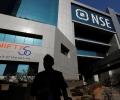
Five firms, including ACC Ltd, HDFC Asset Management Company and FSN E-Commerce Ventures that runs Nykaa, will be dropped from Nifty Next 50 index from September 29. NSE Indices Ltd, an arm of the National Stock Exchange, on Thursday said that Indus Towers and Page Industries will also be dropped from the index. Punjab National Bank, Trent, Sriram Finance, TVS Motor Company, and Zydus Lifesciences will be included in the Nifty Next 50 index, NSE Indices said in a statement.

The Ministry of Commerce and Industry will go ahead with the proposal for 2D barcoding and a unique 'randomly generated numeric code' on packets of medicine destined for export, a senior official said.


Two individuals filed the petition in the high court of Andhra Pradesh

Ranbaxy drugs sold in the United States will be gradually rebranded as Sun Pharma treatments

rediffGURU Chandu Nair advises entrepreneurs and enterprises about how to create and build their business.
According to industry experts, there are more than 10,000 drug manufacturers in the country and most of them are small-sector units operating in the generic segment. With a large number of drugs going off-patent in developed markets like the US and Europe, Indian companies are expected to garner a lion's share in the segment.

'Given the inherent volatility, investors should take at least a three to five-year view.'
For instance, Dr Reddy's Laboratories has six active pharmaceutical units in Andhra Pradesh. The waste streams from the API units mostly contain potassium sulphate, caustic lye, potassium chloride, potassium sulphate and sodium sulphate salts.

'We have to plan for whatever the new normal is.'

As many as 11 industry bodies related to food and pharma sectors on Thursday alleged that the food regulator FSSAI has become "den of corruption" and demanded a CBI inquiry into the functioning of the authority, which shot to limelight over the Maggi issue.

Corporate India is starting to step up its capital expenditure plans amid government incentives and signs of rising demand, company executives and analysts have indicated. This coincides with the Reserve Bank of India (RBI) recently citing a double-digit growth in private capital expenditure. Healthy balance sheets of banks and corporates, along with increasing capacity utilisation and improving business sentiment, are contributing to a favourable environment for sustained growth in private sector investments, the RBI said in its policy last week.

The pharmaceutical companies may suffer sales loss of Rs 3,000 crore (Rs 30 billion) if the government's span of control increases, as proposed in the new pricing policy for the medicines, a section of the industry said on Monday.

The judgment will save taxpayers' money without hurting the pharma industry or R&D.

Among the Sensex firms, JSW Steel, Titan, Tata Steel, Sun Pharma, Reliance Industries, Bharti Airtel, Tata Motors and HDFC Bank were the biggest gainers. NTPC, Tech Mahindra, Maruti, State Bank of India and Larsen & Toubro were among the laggards.
'Taking serious note of the action by unscrupulous elements to malign the Indian generic pharma industry, the embassy of India, Beijing, has been requested to lodge a strong protest with concerned Chinese authorities and also to impress upon them to take stringent action against such unscrupulous elements,' a commerce ministry statement said in New Delhi.

Shares in Sun Pharmaceutical Industries fell by more than 5 per cent after the company settled a patent suit with Pfizer Inc related to its acid-reflux drug for $550 million.

Equity fundraising through initial public offerings (IPOs) rose 20 per cent during the financial year 2023-24 (FY24). During the period, 76 Indian corporates raised Rs 61,915 crore through main board IPOs, compared to Rs 52,116 crore mobilised by 37 IPOs in 2022-23, as disclosed by PRIME Database. However, if one excludes the mega Life Insurance Corporation (LIC) IPO, which came out in 2022-23, IPO mobilisation increased by 58 per cent from last year.

Asian markets were trading mixed with the Nikkei gaining after the US dollar strengthened against the yen.

Benchmark equity indices Sensex and Nifty rebounded from early lows to settle higher on Wednesday following buying in Reliance Industries, Larsen & Toubro and ITC and positive trends in Asian and European markets. The 30-share BSE Sensex rose by 173.22 points or 0.26 per cent to settle at 66,118.69. The index opened lower and fell further to a low of 65,549.96 in morning trade.

The record contraction in the growth rate of eight core sectors will have its impact on IIP.

A lot depends upon the crucial decision-making skills of the management. If you have any doubts about the management then you always have the choice of selling your shares or not buying stocks of those companies at all.

According to a Pricewaterhouse Coopers Report titled 'India Pharma Inc: Capitalising on India's Growth Potential', leading pharmaceutical companies in the country have increased their sales forces by around 50 per cent in 2010.

Equity fundraising through initial public offerings (IPOs) rose 20 per cent during the financial year 2023-24 (FY24). During the period, 76 Indian corporates raised Rs 61,915 crore through main board IPOs, compared to Rs 52,116 crore mobilised by 37 IPOs in 2022-23, as disclosed by PRIME Database. However, if one excludes the mega Life Insurance Corporation (LIC) IPO, which came out in 2022-23, IPO mobilisation increased by 58 per cent from last year.

Among the Sensex firms, Tata Consultancy Services, Larsen & Toubro, Infosys, UltraTech Cement, ICICI Bank, Nestle, ITC and Sun Pharma were the major gainers. Power Grid, NTPC, Tata Motors, Tata Steel, Mahindra & Mahindra and Reliance Industries were among the laggards.

Sun Pharma profit down 30% over compliance costs, lower sales.
Sun Pharmaceutical Industries Ltd has entered into an agreement with two large shareholders of its subsidiary Caraco Pharmaceutical Laboratories Ltd to acquire most of their common stock and options in the latter for $42 million.

Aggressive smaller players are serving a bitter pill to the big boys in the pharmaceutical sector.

Trade deficit during the month narrowed to USD 14.54 billion from USD 15.3 billion in January 2020. It was USD 15.44 billion in December 2020.

Top executives of American pharma companies favour "dialogue" with India and "not confrontation" to address their concerns on key issues like the protection of intellectual property (IP) and clinical trials.

Drug maker Sun Pharmaceutical Industries on Thursday said it has received the US health regulator's nod for marketing a generic version of the Keppra injection, used for treating epilepsy, in the American market.

Operating margins have been the primary driver of corporate earnings in India in recent quarters, despite revenue growth suffering from weak consumer demand. Companies across sectors have reported a sharp improvement in earnings before interest, tax, depreciation, and amortisation (Ebitda) margins over the past two years, benefiting from lower commodity and energy prices. Higher margins more than compensated for slower revenue growth, resulting in double-digit growth in net profit for five consecutive quarters.
It is a Budget with a strong emphasis on agriculture, education, healthcare and infrastructure.
